International Indigenous Peoples Navigation Network (IIPNN)
The International Indigenous Peoples Navigation Network (IIPNN) is a virtual support network for navigators who work with Indigenous Populations.
Native American Cancer Research Corporation (NACR) has implemented patient navigation services since 1994 and conducted Native Patient Navigation (NPN) trainings since the latter 1990s. Following these trainings, Patient Navigators (PN(s)) repeatedly expressed appreciation for the opportunity to talk, network and collaborate with other PNs who work within Indigenous settings.
We were able to create an international Indigenous network to help support one another in our cancer navigation efforts.
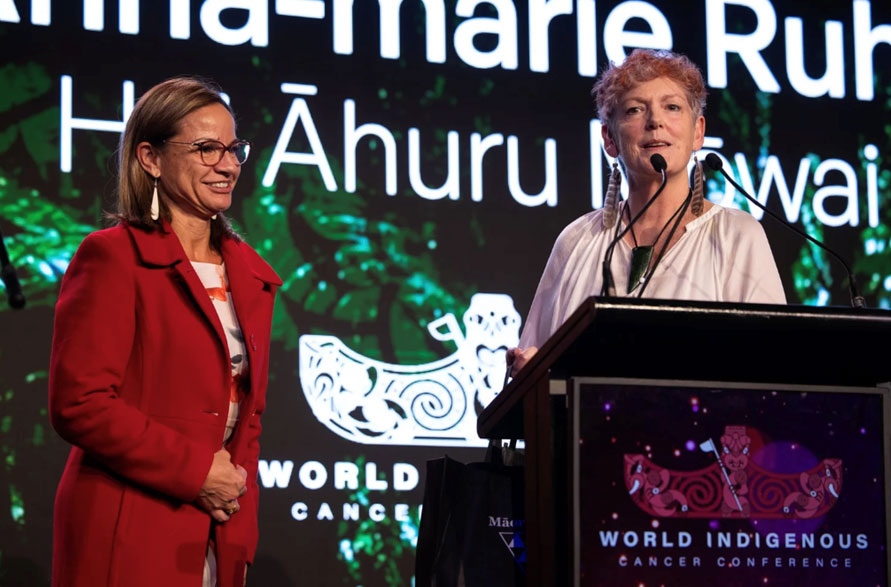
World Indigenous Cancer Conference 2026
Kia ora Professor,
It is finally here. The plenary sessions, official photos, and podcast kōrero from the World Indigenous Cancer Conference 2026 are now live.
Over three days in Tāmaki Makaurau, more than 750 Indigenous researchers, clinicians, advocates and whānau came together from across the globe. Three days of kōrero, connection, and kaupapa. You can relive it, or catch what you missed.
Everything is up on our recap page now, ready for you to explore.
Explore the W.I.C.C 2026 recap here
Upcoming IIPNN Webinars
The next IIPNN will be during winter and will share PN training protocols from US, AUS and NZ. The date has not yet been decided. All IIPNNs meet virtually and are held on a Tuesday for USA and Canada 5:00 MOUNTAIN Time (please convert the time to your time zone) and Wednesday for Pacific Islands, New Zealand and Australia. Most webinars are 90-120 minutes duration and as of March 2022, all are video-taped and later posted onto the IIPNN webpage.
About IIPNN
Name: International Indigenous Peoples' Navigation Network (IIPNN, pronounced, "I pin")
Why an Indigenous Peoples Navigation Network?
There are both cultural and geographic challenges and solutions that may be unique to Indigenous communities and the Patient Navigators who work in those areas. Many Navigators work in isolation. The focus of IIPNN is on sharing stories of how navigation programs have overcome challenges in culturally respectful ways. Such stories may help PNs working in another region or continent try something new or modify what was done to be locally appropriate to one's setting.
Purpose:
Provide a virtual support program to address culturally and geographically unique challenges and solutions of Indigenous Navigation programs.
Participants:
Cancer Patient Navigators who work within Indigenous programs in the USA, Pacific Islands, Canada, New Zealand and Australia.
What would you be responsible for should you choose to join this initiative?
There is no fee. You would be expected to attend 90-minute virtual meetings, held four times each year. The goal is to be supportive of navigators who work within Indigenous communities and the members to feel comfortable to share their stories, lessons learned or request help. Additionally, members will suggest topics for which they would like more information (education topic) for subsequent gatherings. IIPNN is to help us all learn more about one another and to reinforce "we are all related".
What do you do if you choose to become involved in IIPNN?
Send your name, address, work or cell phone and email to Burhansstipanov@gmail.com
Updates about Patient Navigation
- Metrics - Full List
- Metrics - Handout
- Guide to Accredited Certification for PNs
- Oncology Navigation Standards of Professional Practice
- PN competencies and training by Workforce Dev Task Group
- PN Toolkits and Resources recommended by Workforce Development Task Group
Resources Shared by IIPNN Presenters
Multiple PN Resources
- 2025-04-29_Alt_replace_Diversity_Nassi
- IHS Cancer Support Training Flyer Virtual Sept 2025
- IIPNN-NPN Training
- PIN Codes
- Suggested Phrasing
- Metrics
- Alternative Terms to Replace DEI
- PN Resources All in One Place
- Pfizer PN Resouces
- Links to AONN+ PN Resources
Genetic, Biomarker, Language Resources
- CSC’s Precision Medicine Plain Language Lexicon
- AONN+ Poster on Plain Language & Precision Medicine
- CSC’s Precision Medicine educational materials available at no cost
- Talking about Biomarker Testing
- Consistent Common Cancer Testing Terms
Survivorship Resources
Handouts and Slides from IIPNN Webinars
- 2022-10-11 Slides Community Support Community.
- 2023-05-02 Slides Walking Forward LDCT: Addressing Cancer Disparities Among American Indians in Western South Dakota
- 2023-09-26 Slides AONN+ CAPE Resources
- 2023-09-26 Slides In-Home HPV Testing (EDITED version)
- 2024-10-01 Nassi Huntsman Institute
- 2025-09-16 Hopi Women's Health Program, Kellen Polingyumptewa
- 2024-11-19 Cancer WHIRI Cancer care and navigation for Māori in Aotearoa, New Zealand
- IIPNN CMS (Medicare) Reimbursement for PN Services
PUBLICATIONS from IIPNN Presenters
- 2010 Lana Sue Ka`opua, et al. Developing Tautai Lavea'i, a Breast Cancer Patient Navigation Program in American Samoa
- 2015, Beatriz Cuesta-Briand et al. Aboriginal: Addressing unresolved tensions to build effective partnerships: lessons from an Aboriginal cancer support network
- 2015_Cuesta_Briand_AUS_partnerships
- 2016, Beatriz Cuesta-Briand et al. Connecting tracks’: exploring the roles of an Aboriginal women’s cancer support network
- 2016, Gail Garvey et al. Indigenous cancer patient and staff attitudes towards unmet needs screening using the SCNAT-IP.
- 2016_Garvey_IndigenousCancerPatient
- 2017_Bernardes_AUS_Lessons_pilot_study_Indigenous_PN
- 2018, C.M. Bernardes, et al. Lessons learned from a pilot study of an Indigenous patient navigator intervention in Queensland, Australia
- 2019_Valverde_NNRT_competencies
- 2020, E.V. Taylor et al: “We’re very much part of the team here”: A culture of respect for Indigenous health workforce transforms Indigenous health care
- 2020 Va’atausili Tofaeono et al. Research Capacity Strengthening in American Samoa
- 2021, E.V. Taylor, et al. “The support has been brilliant”: experiences of Aboriginal and Torres Strait Islander patients attending two high performing cancer services
- 2021_Taylor_AUS_The support has been brilliant
- 2021_Wells_Valverde_Dwyer_Calcoun_COVID_PN
- 2022-08-04, Redwood, Diana handout, "Improving CRC screening in Alaska Tribal Health System through patient navigation and community outreach"
- 2022 Lana Sue Ka`opua, et al. Culture, Social Determinants of Health and Palliative Care in Pacific Basin
- 2024-01_Varanasi_PN_Job_levels_WFD
- 2024-03-01_Pratt-Chapman Article_FINAL
- 2025-08-30_PNRS_White_Paper_1
- 2025-10-22_PNRS_White_Paper_2_CT
- 2025_Varanasi_job_descr
VIDEOS FROM IIPNN WEBINARS
March 16, 2022 IPNN webinar clips
We did not begin recording webinars until March 16, 2022.
- 2022-03-16 IIPNN (2022-03-16) Participant Self-Introductions
- Gail Garvey, Part 1
- Gail Garvey, Part 2
- Sandra Thompson, Part 1
- Sandra Thompson, Part 2
- Sandra Thompson, Part 3
- Sandra Thompson, Part 4
- Overview of AONN+ and Native American Cancer Initiatives PN Training Oppt & Resources
April 27, 2022 Linda Burhansstipanov, DrPH, overview of PONT and AONN+ Metric Toolkit
August 4, 2022 Diana Redwood, PhD, ANTHC Colorectal Cancer Control Program
October 11, 2022 Claire Saxton from the Cancer Support Community
February 28, 2023 Patient Navigation Across the CRC Control continuum: Experience from AI ACCSIS Projects
May 2, 2023 Walking Forward video
September 26, 2023 in-home HPV cervical cancer studies and an overview of Cancer Advocacy and Patient Education (CAPE) resources
- AONN CAPE Overview
- Dr. Harper describes in-Home HPV testing - Part 1
- Dr. Harper describes in-Home HPV testing - Part 3
December 5, 2023 Getting Started with Metrics and Reports for Patient Navigation Programs
April 2, 2024
May 22, 2024
October 1, 2024
October 1/2, 2024 Janet Quintana-Cook from New Mexico, USA shared information about their Native American Workgroup and its efforts to create and implement a cancer plan that is specifically for their New Mexico Native communities. For those from outside the USA, more and more of our tribal and urban Indian programs participate in both state-focused comprehensive cancer plans, as well as Indigenous-focused cancer plans. The New Mexico tribal plan is among the best in Linda B's opinion. The second speaker was Phyllis Nassi from Huntsman Cancer Center. She share strategies their program used to improve and expand education and assistance to American Indians to Utah, Nevada, Idaho, Montana, and South Dakota. the knowledge gained from their navigation program was invaluable when she became the primary caregiver to her husband through 3 cancer diagnoses. Very informative and powerful.